
At the center, there is a glowing circular core—almost like a sun or source of energy—suggesting the origin of life or consciousness. Surrounding it are multiple concentric rings with arrows, indicating a continuous, cyclical process rather than a linear progression.
Around these rings, several key visual elements repeat:
* A **continuous loop of existence**
* The **interconnection between life forms and consciousness**
* A **spiritual journey** involving transformation, death, and rebirth
The parchment-style background and symmetrical layout give it the feel of an old manuscript or sacred diagram, combining artistic and philosophical themes.
Detail Description
Here’s a more detailed, structured reading of the image—almost like interpreting it as a technical diagram of a philosophical system.
🌀 Overall Composition & Geometry


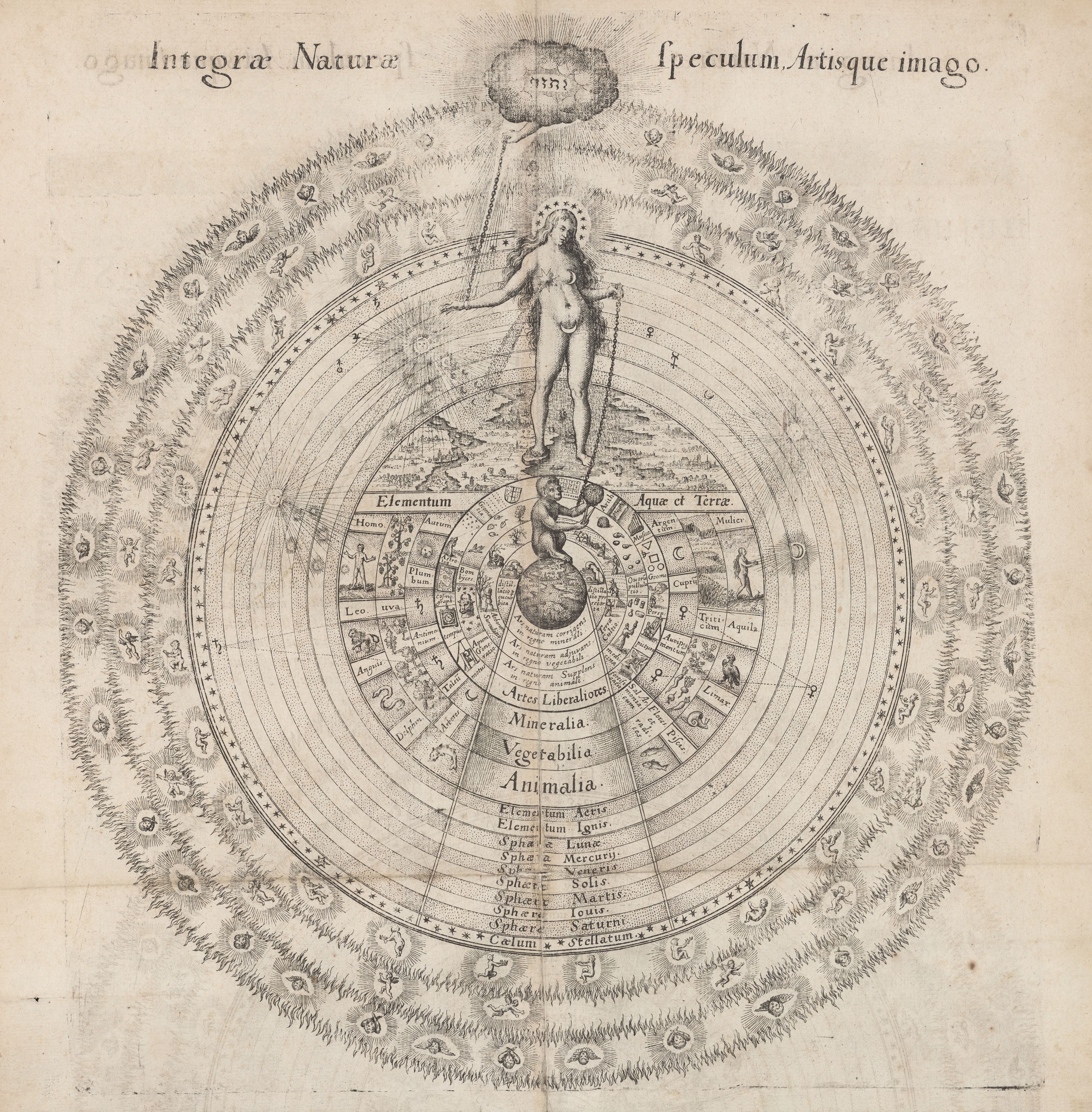
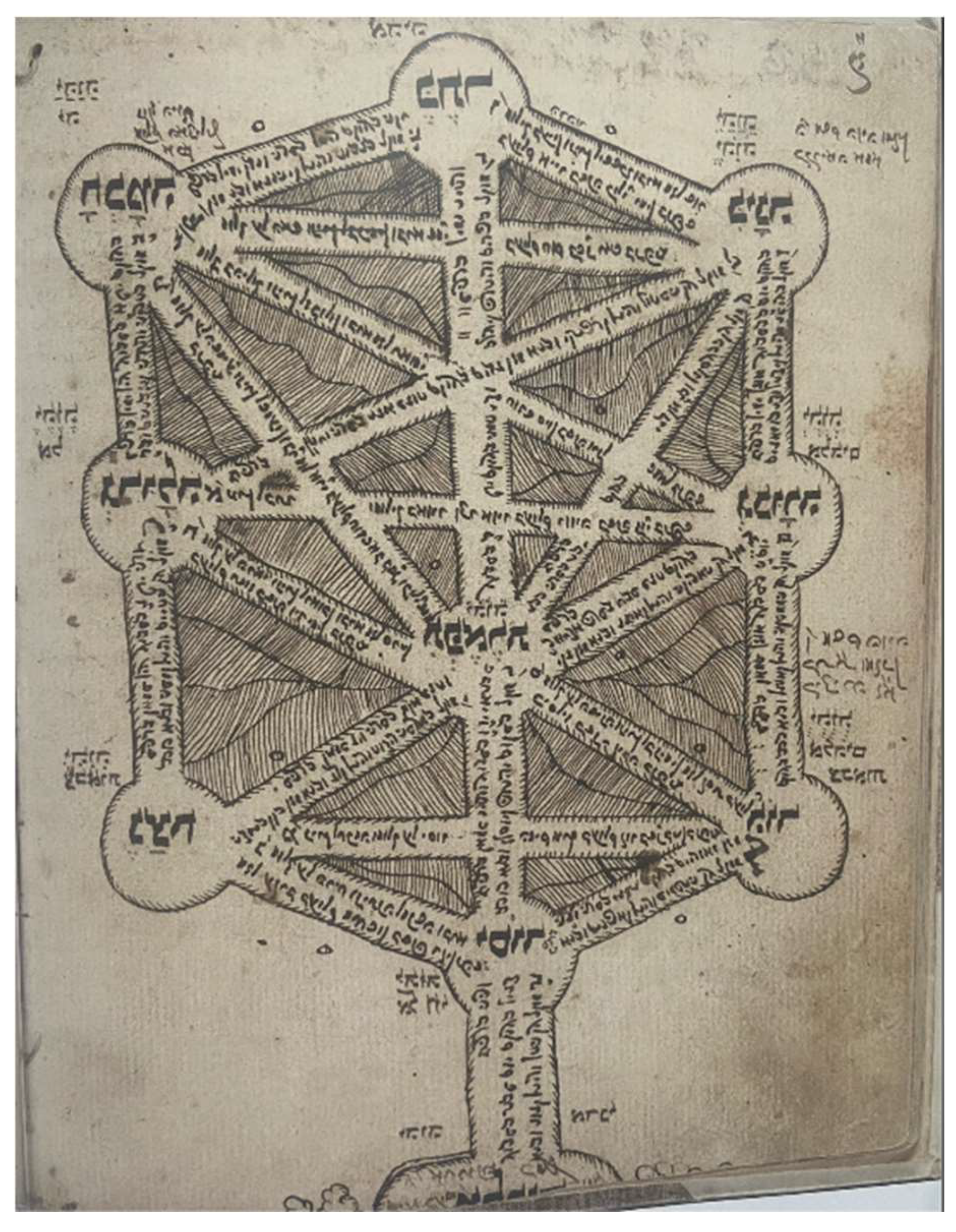
The entire image is built as a radially symmetric mandala.
It consists of multiple concentric rings, each with:
Arrows indicating directional flow
Segmented pathways suggesting stages or transitions
The motion is clearly cyclical (closed-loop)—no beginning or end is visually privileged.
The layout resembles:
A systems diagram (like process flow)
Combined with a cosmological map
☀️ Central Core (Origin / Consciousness)


At the very center is a bright, radiant sphere with branching, vein-like patterns.
It resembles:
A sun, neuron, or energy nexus
Interpretation:
Could represent pure consciousness, soul, or universal source
The branching lines suggest connection outward—like life emanating from it
🌳 Repeating Tree Motifs (Life Phases)


Several circular nodes contain leafless trees with roots exposed.
These are distributed evenly across the rings.
Subtle variation suggests different stages:
Growth → stagnation → decay → renewal
Symbolism:
Trees act as biological analogs of the human life cycle
Roots + branches mirror below/above, material/spiritual
🧘 Human Figures (States of Being)

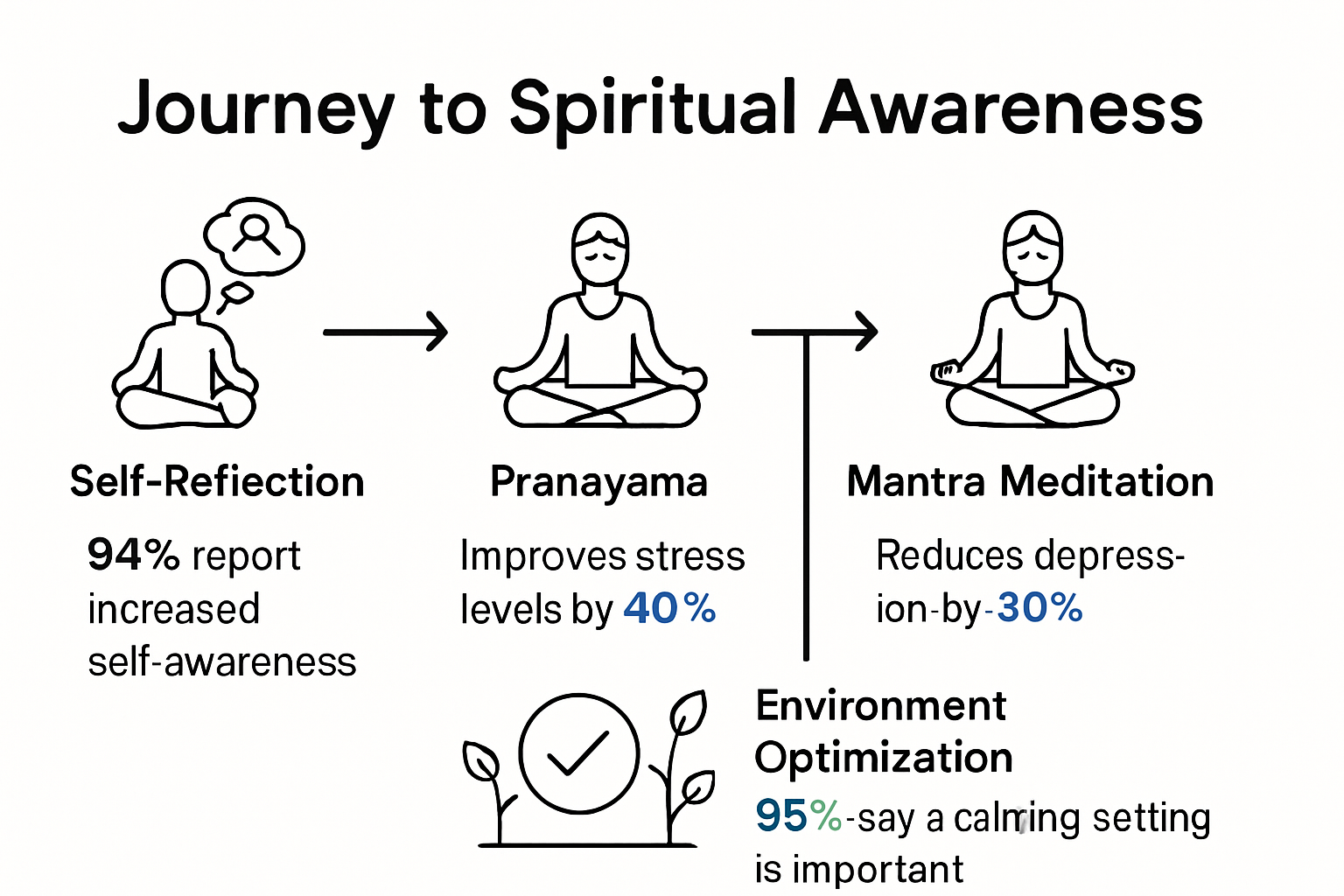

Human-like figures appear at key points:
Sitting cross-legged (meditative posture)
Some with halos or radiating symbols
These figures are not identical:
Some appear more grounded
Others more enlightened or transcendent
Interpretation:
Represent different levels of awareness
Possibly stages like:
Birth → Ignorance → Seeking → Awakening → Liberation
🔁 Directional Arrows & Pathways
The rings are filled with curved arrows, consistently guiding flow.
Flow appears:
Clockwise overall, but with inner variations
This suggests:
Not just a loop, but a guided progression
Similar to:
Feedback loops in engineering systems
Closed hydraulic or ecological cycles
🔮 Secondary Symbols (Nodes / Artifacts)
Small decorative circular elements appear between major nodes.
They look like:
Seals, gears, or medallions
Possible meanings:
Transition points
Energy exchanges
Or simply structural markers dividing phases
📜 Text & Script (Decorative Knowledge Layer)
The diagram includes dense, stylized text along the rings and margins.
It resembles:
Ancient script, but largely non-legible / ornamental
Function:
Adds the feel of a philosophical manuscript
Suggests that each segment has doctrinal meaning, even if not readable
🌌 Outer Panels (Explanatory Sections)
In the corners/edges, there are blocks of text with headings.
These resemble:
Annotations or commentary
Like margins in a scientific or religious manuscript
They frame the diagram as something meant to be studied, not just viewed
🧠 Deeper Interpretation (System-Level)
From a more analytical perspective (you might appreciate this as an engineer):
The diagram behaves like a closed-loop lifecycle system:
Input: Birth / emergence
Process: Growth, experience, awareness
Output: Death / transformation
Feedback: Re-entry into the system (rebirth)
The central node = invariant source
The outer loops = state transitions
The human figures = system states (conscious agents)
🎯 Overall Meaning
The image is not just decorative—it encodes a conceptual model:
Life is cyclical, not linear
Consciousness evolves through repeated iterations
Nature (trees) and humans are parallel systems
There is a central unifying source, but multiple experiential paths
.jpeg)

No comments:
Post a Comment